Description: Learn why cotton buds may not be the safest way to clean your ears. Dr. Rahul Agrawal explains the risks of earwax blockage, infections, eardrum injury and temporary hearing loss.
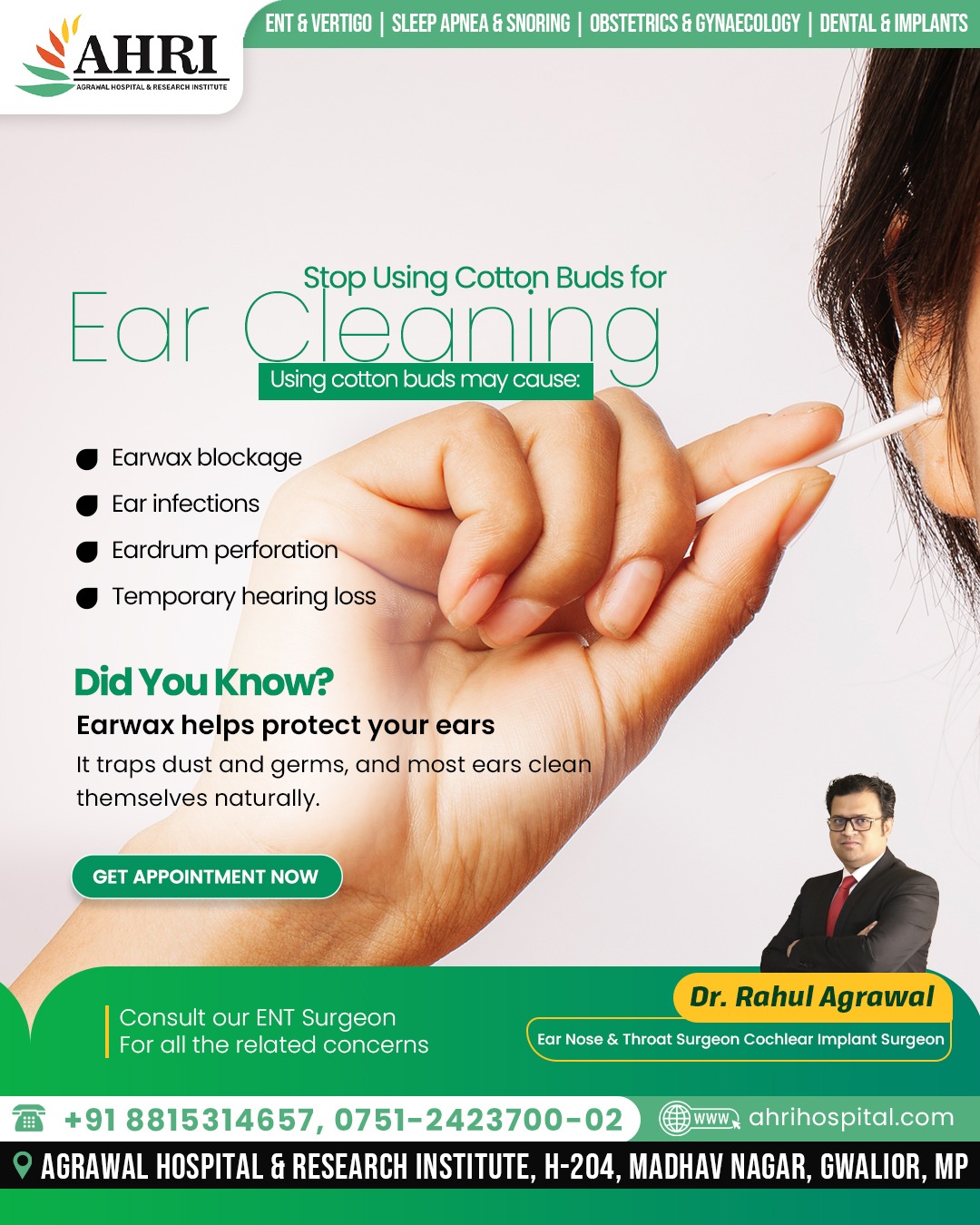
Cleaning your ears may seem like a normal part of personal hygiene. Many people reach for cotton buds when they feel there is too much earwax. It feels simple and convenient, but putting cotton buds inside the ear can sometimes cause more problems than it solves.
According to Dr. Rahul Agrawal, ENT Surgeon and Cochlear Implant Surgeon at Agrawal Hospital & Research Institute, Gwalior, the ear has its own natural way of cleaning itself. In many cases, earwax does not need to be removed manually.
Earwax, also known as cerumen, is not simply dirt that needs to be removed.
It helps protect the ear canal by trapping dust and germs. It also provides a natural protective layer for the delicate skin inside the ear.
Most ears gradually move excess earwax towards the outside, where it can be cleaned gently without putting anything inside the ear canal.
The biggest problem with cotton buds is that they can push earwax deeper into the ear instead of removing it. Regular or improper use may lead to several problems, including:
The risk can be greater when people use cotton buds forcefully or insert them too deeply.
Not necessarily.
If earwax is not causing symptoms, there is often no reason to keep trying to remove it from inside the ear. The ear's natural cleaning process usually takes care of excess wax.
However, if you experience symptoms such as blocked ears, reduced hearing, pain, discharge or persistent discomfort, it is better to consult an ENT specialist rather than trying to remove the wax yourself.
If you think you have an earwax blockage, avoid inserting cotton buds or other objects into the ear.
An ENT specialist can examine the ear and determine whether earwax is actually causing the problem. If removal is necessary, the doctor can recommend an appropriate and safe method based on the condition of your ear.
It is especially important to seek medical advice if ear blockage is accompanied by pain, discharge, dizziness or a noticeable change in hearing.
Dr. Rahul Agrawal is an ENT Surgeon and Cochlear Implant Surgeon associated with Agrawal Hospital & Research Institute, Gwalior.
Patients can consult an ENT specialist for concerns related to the ear, nose and throat, including earwax-related problems and other ENT conditions.
If you are experiencing repeated ear blockage, hearing difficulties, ear discomfort or other related symptoms, professional evaluation can help identify the actual cause.
Agrawal Hospital & Research Institute is located in Madhav Nagar, Gwalior, Madhya Pradesh.
Hospital: Agrawal Hospital & Research Institute
Address: H-204, Madhav Nagar, Gwalior, Madhya Pradesh
Doctor: Dr. Rahul Agrawal
Speciality: ENT and Cochlear Implant Surgery
Phone:
+91 8815314657,
0751-2423700-02
Website:
https://www.ahrihospital.com/
You can visit the hospital website to learn more about the available services and consultation details.
Earwax is a natural part of ear protection, and trying to keep your ears completely free of wax is not always necessary.
Cotton buds may push wax deeper into the ear canal and, if used incorrectly, can contribute to blockage, infection or injury. Instead of repeatedly putting objects inside your ears, allow them to clean naturally and seek professional advice when you have symptoms.
If you are experiencing persistent ear blockage, hearing changes, pain or other ENT concerns, consult Dr. Rahul Agrawal at Agrawal Hospital & Research Institute, Gwalior, for appropriate evaluation and guidance.
Agrawal Hospital & Research Institute, Gwalior, MP
| Mon | 10:00 AM – 8:00 PM |
| Tue | 10:00 AM – 8:00 PM |
| Wed | 10:00 AM – 8:00 PM |
| Thu | 10:00 AM – 8:00 PM |
| Fri | 10:00 AM – 8:00 PM |
| Sat | 10:00 AM – 8:00 PM |
info@ahrihospital.com
+91-8815314657, 0751-2423700, 02
Agrawal hospital and Research institute H-204, Madhav Nagar opp AG office Gwalior, MP India 474002