For many people, the thought of getting a cavity treated brings feelings of anxiety and fear. Concerns about dental drills, discomfort, or pain often cause patients to postpone treatment. Unfortunately, delaying cavity treatment can allow tooth decay to progress, resulting in more complex dental procedures later.
Modern dentistry has transformed the way cavities are treated. Today, patients can benefit from advanced techniques that focus on comfort, precision, and minimally invasive care. At Agrawal Hospital & Research Institute (AHRI), Gwalior , the Department of Endodontics provides comprehensive dental care with a patient-first approach, helping individuals restore their oral health in a comfortable and reassuring environment.
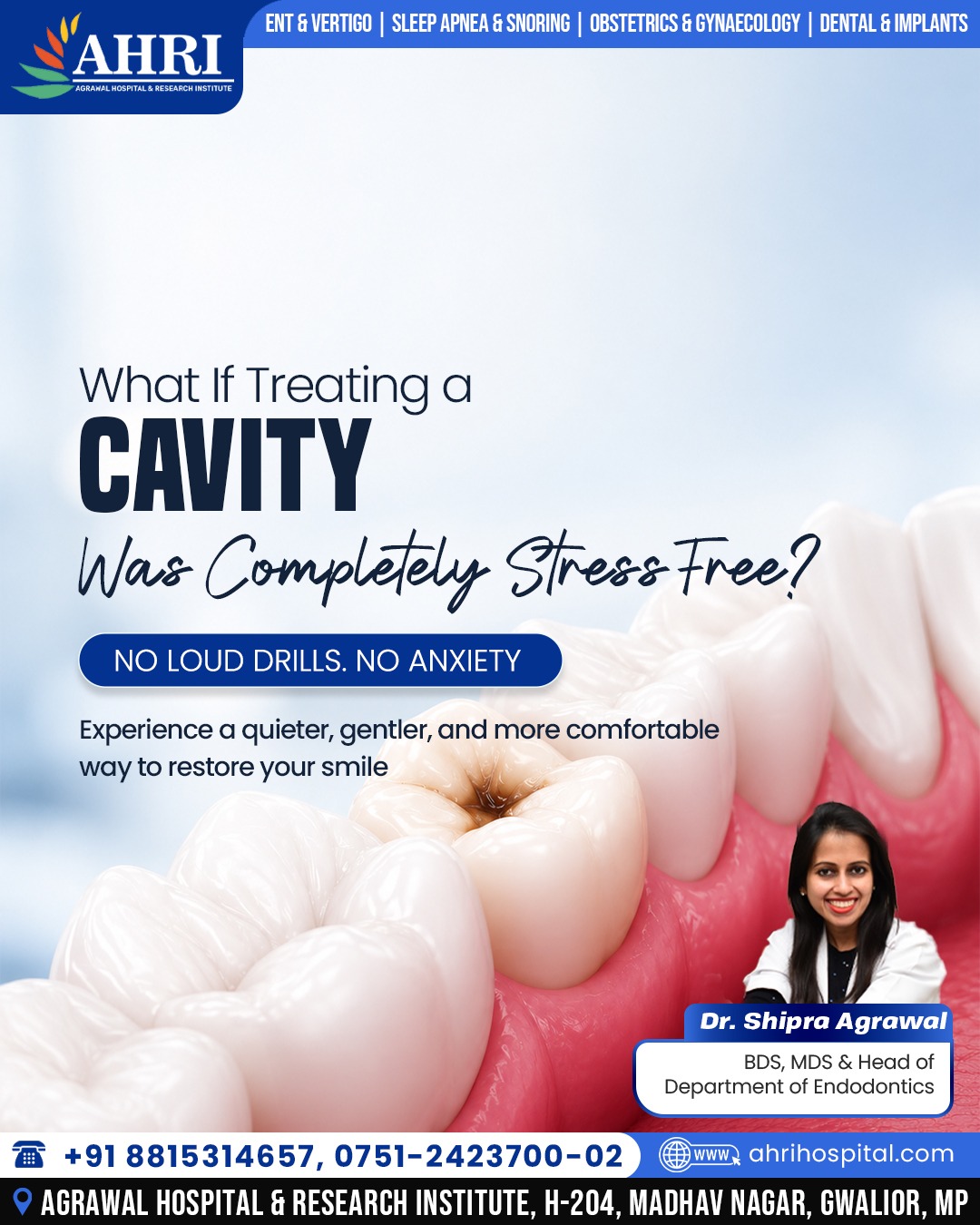
A cavity is a permanently damaged area of a tooth caused by tooth decay. It develops when bacteria in the mouth produce acids that gradually erode the tooth enamel.
If left untreated, cavities can grow larger and affect deeper layers of the tooth, leading to pain, infection, or even tooth loss.
Several factors contribute to the development of cavities, including:
Maintaining good oral hygiene and scheduling regular dental visits can significantly reduce the risk of tooth decay.
Early cavities may not cause noticeable symptoms. However, as decay progresses, patients may experience:
If you notice any of these symptoms, it is advisable to consult a dental professional promptly.
Treating cavities in their early stages offers several advantages, such as:
Ignoring a cavity can eventually lead to infection, root canal treatment, or tooth extraction.
Advancements in dental technology have made cavity treatment more comfortable than ever before. Modern dental practices emphasize patient comfort through:
These innovations help reduce anxiety while improving treatment outcomes.
Depending on the severity of tooth decay, treatment options may include:
Small cavities are typically restored using durable filling materials that help restore the tooth's shape and function.
If decay reaches the inner pulp of the tooth, root canal treatment may be recommended to remove infected tissue while preserving the natural tooth.
Extensively damaged teeth may require crowns to restore strength, appearance, and functionality.
Professional cleanings, fluoride applications, and oral hygiene guidance can help prevent future cavities.
The most appropriate treatment depends on the extent of decay and an individual clinical evaluation.
Maintaining good oral health habits can greatly reduce the risk of cavities. Helpful preventive measures include:
Consistency in oral care plays an important role in preventing tooth decay.
You should schedule a dental consultation if you experience:
Early diagnosis allows timely treatment and helps preserve natural teeth.
The Department of Endodontics at Agrawal Hospital & Research Institute (AHRI), Gwalior , provides comprehensive care for a wide range of dental conditions. The department focuses on accurate diagnosis, evidence-based treatment, and patient comfort to help individuals maintain healthy teeth and confident smiles.
Under the expertise of Dr. Shipra Agrawal (BDS, MDS), Head of the Department of Endodontics, patients receive personalized treatment plans based on their specific dental needs. Whether managing cavities, performing root canal treatments, or restoring damaged teeth, the goal is to deliver high-quality care in a professional and supportive environment.
Cavities are among the most common dental problems, but timely treatment can prevent serious complications and help preserve your natural teeth. Modern dental care emphasizes patient comfort, precision, and effective treatment, making cavity management more convenient than ever before. If you notice signs of tooth decay, seeking professional dental evaluation at the earliest can support better oral health and long-term well-being.
Agrawal Hospital & Research Institute, Gwalior, MP
| Mon | 10:00 AM – 8:00 PM |
| Tue | 10:00 AM – 8:00 PM |
| Wed | 10:00 AM – 8:00 PM |
| Thu | 10:00 AM – 8:00 PM |
| Fri | 10:00 AM – 8:00 PM |
| Sat | 10:00 AM – 8:00 PM |
info@ahrihospital.com
+91-8815314657, 0751-2423700, 02
Agrawal hospital and Research institute H-204, Madhav Nagar opp AG office Gwalior, MP India 474002