Broken or Ruptured Teeth: Causes, Symptoms, Treatment & Dental Crowns by Dr. Shipra Agrawal
Description: Learn about broken or cracked teeth: causes, symptoms, treatment options and when a dental crown is needed. Dr. Shipra Agrawal explains how to protect and restore a damaged tooth.
Introduction
A broken, cracked, or damaged tooth can happen because of an accident, biting something hard, tooth decay, weakened tooth structure, or normal wear over time. Depending on the extent of the damage, a broken tooth may cause pain, sensitivity, difficulty chewing, or discomfort while eating.
In some cases, a damaged tooth can be restored with a dental crown. A crown is a custom-made covering placed over a tooth to restore its shape, strength, function, and appearance.
However, not every broken tooth requires a crown. The appropriate treatment depends on how much of the tooth has been damaged and whether the tooth's inner structures are affected.
What Causes a Tooth to Break or Crack?
Teeth can become damaged for several reasons. Common causes include:
- Biting hard foods or objects
- Accidental injury
- Tooth decay
- Large or old dental fillings
- Weakened tooth structure
- Teeth grinding or clenching
- Normal wear over time
- Previous dental treatment
A tooth that has already been weakened by decay or a large filling may be more vulnerable to cracking or breaking.
Common Symptoms of a Broken or Cracked Tooth
The symptoms can vary depending on the location and severity of the damage.
1. Tooth Pain
A broken or cracked tooth may cause pain, particularly while biting or chewing. The discomfort may be intermittent or persistent.
2. Tooth Sensitivity
Damage to a tooth may make it sensitive to hot, cold, sweet, or acidic foods and drinks.
3. Pain While Chewing
Some people experience discomfort when putting pressure on the affected tooth. Pain while chewing can be a sign that the tooth needs dental evaluation.
4. Sharp or Rough Tooth Edge
A broken tooth may leave a sharp or uneven edge that can be noticed with the tongue or may irritate the cheek or tongue.
5. Visible Damage
A portion of the tooth may appear chipped, cracked, or broken. In some cases, the damage may not be easily visible and can only be identified during a dental examination.
6. Swelling or Gum Discomfort
If the damaged tooth is associated with infection or inflammation, swelling or discomfort around the gums may occur.
Can a Broken Tooth Be Fixed With a Dental Crown?
In many cases, a dental crown can be used to restore a damaged or weakened tooth.
A crown is designed to cover the visible portion of the tooth and can help restore its shape and function. It may be considered when there is insufficient healthy tooth structure for a simpler restoration.
The dentist will first assess the tooth and determine whether a crown is appropriate.
When Is a Dental Crown Recommended?
A dental crown may be recommended in situations such as:
- A significantly broken tooth
- A weakened tooth with substantial loss of structure
- A tooth with a large filling that has become fragile
- A tooth that has undergone root canal treatment
- Certain cracked or damaged teeth
- A tooth requiring additional protection after restorative treatment
The treatment decision depends on the condition of the tooth and the amount of healthy tooth structure remaining.
How Does a Dental Crown Restore a Broken Tooth?
A dental crown covers the prepared tooth and restores its external shape.
Depending on the individual case, the general process may involve:
1. Dental Examination
The dentist examines the damaged tooth and assesses the extent of the fracture, decay, or other damage.
2. Additional Tests if Required
Dental X-rays or other investigations may be recommended when the dentist needs to assess the tooth roots, surrounding bone, or inner structures.
3. Tooth Preparation
If a crown is suitable, the tooth may be carefully prepared so the crown can fit properly.
4. Crown Placement
A custom-made dental crown is placed over the prepared tooth and adjusted to provide an appropriate fit and bite.
5. Follow-Up
The dentist may recommend a follow-up visit to check the crown, bite, and overall condition of the restored tooth.
What If the Tooth Is Severely Damaged?
Not every broken tooth can be treated with a crown alone.
If the inner part of the tooth is affected, the dentist may need to consider additional treatment before placing a crown. For example, a tooth with inflammation or infection of the dental pulp may require root canal treatment.
If a tooth is too severely damaged to be restored, extraction and replacement options may sometimes need to be considered.
The treatment should therefore be decided after a proper dental examination rather than based only on the appearance of the broken tooth.
What Should You Do After Breaking a Tooth?
If you break or crack a tooth, consider these basic steps:
- Contact a dentist for an evaluation.
- Avoid chewing hard foods with the affected tooth.
- Keep the area clean with gentle oral hygiene.
- Rinse your mouth gently if there is food or debris around the area.
- If a piece of the tooth has broken off, keep it safely and show it to your dentist.
- Avoid attempting to repair the tooth yourself.
If the injury causes significant pain, swelling, bleeding, or other concerning symptoms, seek dental care promptly.
How to Prevent Tooth Damage
Some habits can help reduce the risk of broken or cracked teeth.
Avoid Biting Hard Objects
Do not use your teeth to open packages, bite hard non-food objects, or break materials.
Be Careful With Hard Foods
Very hard foods can put significant pressure on teeth. Taking appropriate care while eating may help reduce the risk of dental damage.
Maintain Good Oral Hygiene
Regular brushing, cleaning between the teeth, and routine dental check-ups can help identify decay and other problems that may weaken teeth.
Treat Tooth Decay Early
Untreated decay can weaken the tooth structure. Early dental treatment may help prevent more extensive damage.
Address Teeth Grinding
Persistent teeth grinding or clenching can place additional stress on teeth. If you notice these habits, discuss them with your dentist.
When Should You See a Dentist?
You should consider seeing a dentist if you experience:
- A broken or chipped tooth
- A visible crack in a tooth
- Persistent tooth sensitivity
- Pain while chewing
- Sudden tooth pain
- A sharp or rough tooth edge
- Swelling around a tooth
- A tooth damaged during an accident
- A previously treated tooth that has become damaged
A broken tooth should be evaluated even if it does not initially cause significant pain because the extent of damage may not always be visible.
When to Consult a Dental Specialist
A dental specialist can assess a damaged tooth and determine whether it can be restored with a crown, filling, root canal treatment, or another appropriate procedure.
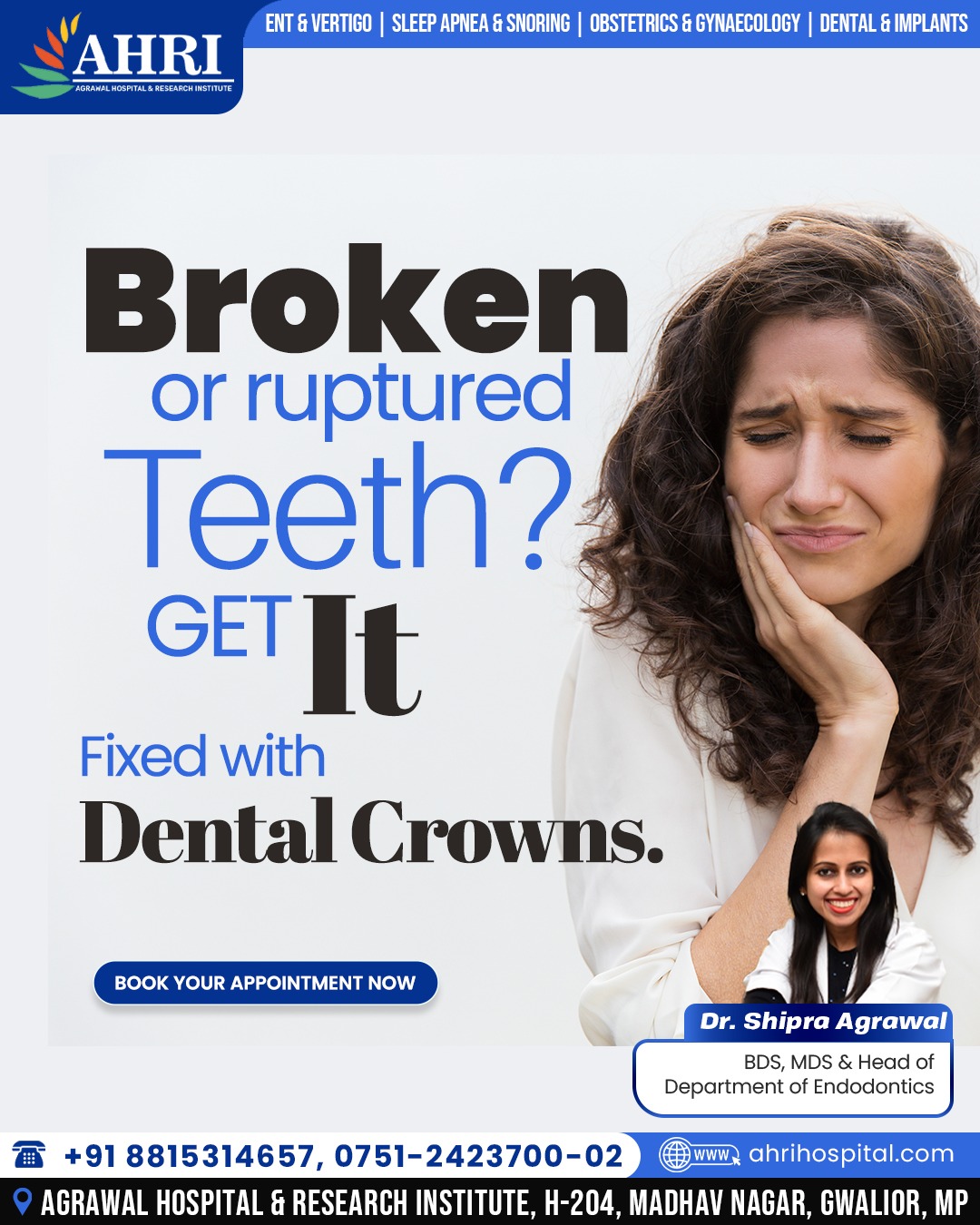
Dr. Shipra Agrawal is associated with Agrawal Hospital & Research Institute (AHRI), Gwalior, and is identified in the promotional material as BDS, MDS and Head of Department of Endodontics.
If you have a broken or damaged tooth, professional evaluation can help determine the most appropriate way to restore its function and protect the remaining tooth structure.
For more information:
Dr. Shipra Agrawal – Agrawal Hospital & Research Institute (AHRI)
Address: H-204, Madhav Nagar, Gwalior, Madhya Pradesh
Phone:
+91 8815314657,
0751-2423700-02
Website:
https://www.ahrihospital.com/
Conclusion
A broken or cracked tooth can result from injury, tooth decay, biting hard foods, weakened tooth structure, grinding, or normal wear. Depending on the extent of the damage, a dental crown may be an effective option for restoring and protecting the tooth.
Symptoms such as tooth pain, sensitivity, discomfort while chewing, visible cracks, or a sharp broken edge should not be ignored. Even when a damaged tooth does not hurt, a dental examination can help determine whether further treatment is needed.
A dentist can assess the condition of the tooth and recommend the appropriate treatment, which may include a crown or, when necessary, additional procedures such as root canal treatment.
If you have a broken or damaged tooth, getting it evaluated early can help determine the best way to protect the tooth and maintain normal oral function.