How to Stop a Nosebleed: First Aid Steps, Causes and When to See a Doctor by Dr. Rahul Agrawal
Description: Learn how to stop a nosebleed with simple first-aid steps. Dr. Rahul Agrawal explains common causes, prevention tips, mistakes to avoid and when to see a doctor.
Introduction
A nosebleed, medically known as epistaxis, is a common condition that can happen due to dry air, minor irritation, allergies, nose picking, or a small injury. Although most nosebleeds are not serious, knowing the correct first-aid steps can help control the bleeding safely.
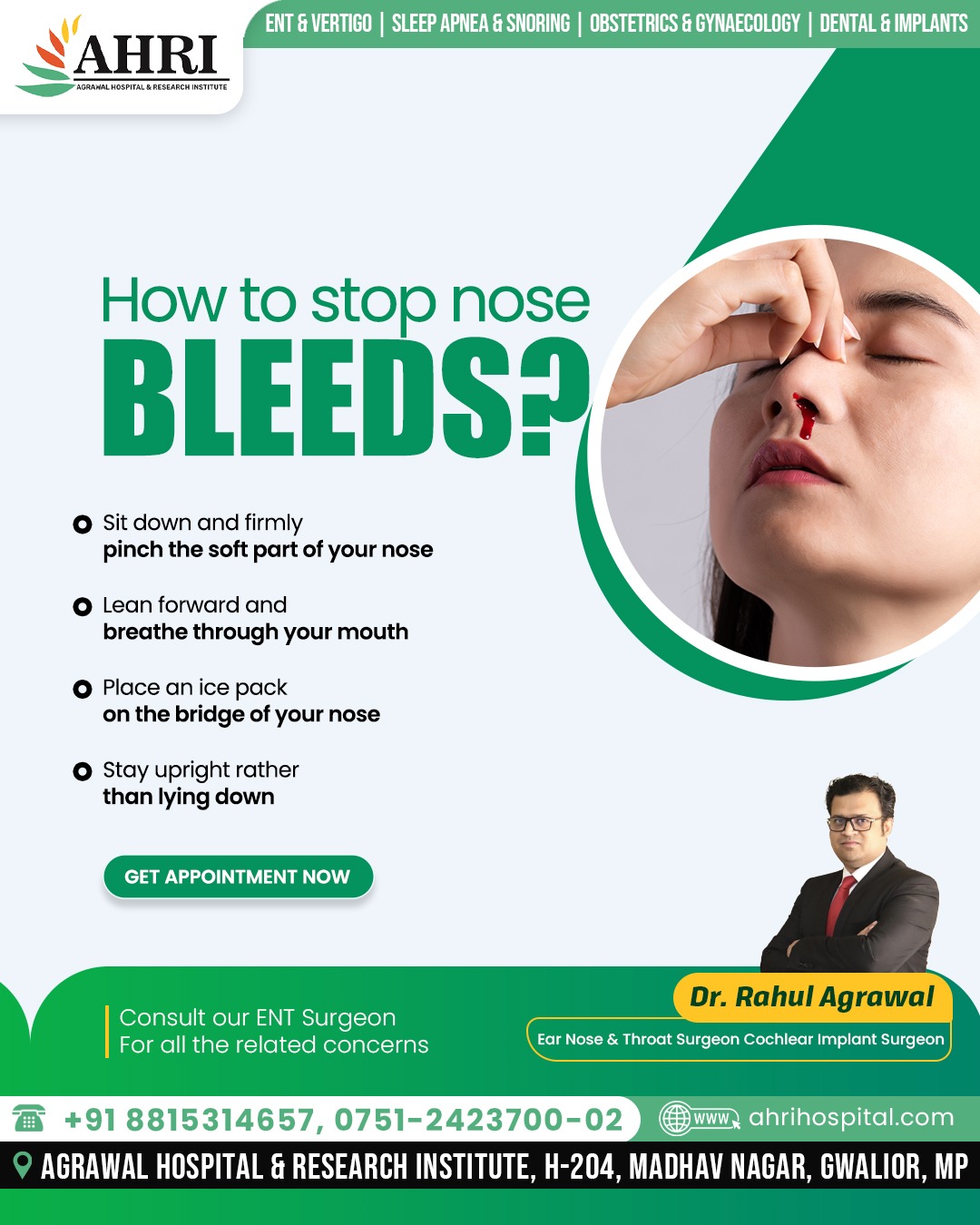
When a nosebleed occurs, staying calm and following the right technique is important. Sitting upright, leaning slightly forward, and applying gentle pressure to the soft part of the nose are commonly recommended first-aid measures.
How to Stop a Nosebleed
If your nose starts bleeding, follow these basic steps:
1. Sit Down and Stay Calm
Sit upright rather than lying down. Staying calm can make it easier to manage the situation.
2. Lean Forward
Lean your head and upper body slightly forward. This helps prevent blood from flowing toward the back of your throat.
Avoid tilting your head backward.
3. Pinch the Soft Part of Your Nose
Use your thumb and index finger to firmly pinch the soft part of your nose, just below the bony bridge.
Keep the pressure continuous for around 10–15 minutes without repeatedly releasing your fingers to check whether the bleeding has stopped.
4. Breathe Through Your Mouth
While holding your nose, breathe slowly through your mouth. Try to remain relaxed while maintaining continuous pressure.
5. Use a Cold Compress if Helpful
A cold compress placed over the nose or cheeks may feel soothing. However, the most important first-aid measure is continuous pressure on the soft part of the nose.
6. Stay Upright After the Bleeding Stops
Once the bleeding has stopped, continue to take it easy for a while. Avoid immediately blowing or picking your nose, as this may cause the bleeding to start again.
What Causes Nosebleeds?
Nosebleeds can occur for several reasons. Common causes include:
- Dry air
- Nasal irritation
- Nose picking
- Allergies
- Colds and respiratory infections
- Minor injuries to the nose
- Frequent or forceful nose blowing
- Irritation from certain nasal sprays
Sometimes, nosebleeds can also be associated with medications or underlying health conditions.
How to Prevent Frequent Nosebleeds
If you experience nosebleeds regularly, some simple measures may help reduce nasal irritation.
Keep the Nose Moist
Dryness inside the nose can make the nasal lining more prone to irritation. Maintaining appropriate humidity and using a doctor-recommended saline nasal product may help.
Avoid Picking or Scratching the Nose
Nasal tissues can be delicate. Picking or scratching inside the nose can cause irritation and bleeding.
Blow Your Nose Gently
Forceful nose blowing may irritate the nasal lining and can sometimes trigger bleeding.
Protect Your Nose From Injury
Take appropriate precautions during activities where the nose could be injured.
When Should You See a Doctor?
Most minor nosebleeds stop with appropriate first aid. However, medical attention may be needed if:
- The bleeding does not stop despite continuous pressure.
- The bleeding is heavy or keeps recurring.
- The nosebleed follows a significant injury.
- You feel weak, faint, or unusually unwell.
- You are taking medicines that affect blood clotting.
- You frequently experience unexplained nosebleeds.
For children and teenagers, parents or guardians should seek medical advice when a nosebleed is persistent, severe, recurrent, or associated with an injury or other concerning symptoms.
Common Mistakes to Avoid During a Nosebleed
Knowing what not to do is also important.
Do Not Tilt Your Head Back
Tilting the head backward can allow blood to run toward the throat. Leaning forward is generally preferred.
Do Not Lie Flat
Remaining upright makes it easier to manage the bleeding and reduces the chance of swallowing blood.
Do Not Keep Checking Too Soon
Releasing pressure repeatedly to see whether the bleeding has stopped can interfere with clot formation. Maintain continuous pressure for the recommended period.
Do Not Immediately Blow Your Nose
After the bleeding stops, avoid forceful nose blowing or unnecessary irritation of the nose for a while.
Nosebleed First Aid: Quick Guide
1. Sit upright
Sit upright and keep your head elevated.
2. Lean slightly forward
Lean slightly forward to prevent blood from flowing into your throat.
3. Pinch the soft part of the nose
Gently pinch the soft part of your nose using your thumb and index finger.
4. Maintain continuous pressure
Keep applying pressure continuously for about 10–15 minutes.
5. Breathe through your mouth
Continue breathing through your mouth while holding your nose.
6. Stay calm
Stay calm and avoid blowing, picking, or disturbing your nose after the bleeding stops.
When to Consult an ENT Specialist
An ENT (Ear, Nose and Throat) specialist can evaluate repeated or unexplained nosebleeds and determine whether there is an underlying nasal problem requiring treatment.
If nosebleeds are frequent or difficult to control, professional evaluation can help identify possible causes and appropriate treatment options.
At Agrawal Hospital & Research Institute (AHRI), Gwalior, ENT services are available for concerns involving the ear, nose, and throat. The hospital's promotional material features Dr. Rahul Agrawal, an ENT Surgeon and Cochlear Implant Surgeon.
Conclusion
A nosebleed can often be managed with simple first aid. The key steps are to sit upright, lean forward, pinch the soft part of the nose continuously, and breathe through the mouth. Avoid tilting your head backward or lying down while the nose is bleeding.
If bleeding is severe, persistent, recurrent, follows a significant injury, or is accompanied by concerning symptoms, seek medical attention. An ENT specialist can help evaluate frequent nosebleeds and recommend appropriate care.